I was 21 years old, and I had never felt so small in my own life.
That winter, my world had shrunk to numbers scribbled on sticky notes and coins lined up on my desk like soldiers waiting to be counted. Rent was due in three days.
My bank account showed a balance that made my stomach twist every time I opened the app. My fridge hummed loudly in my tiny apartment, but inside it was almost empty except for a half-bottle of ketchup, a carton of eggs that expired yesterday, and a single apple that was starting to wrinkle.
I kept telling myself I would figure it out somehow.
I always did. That was the lie I clung to when I lay awake at night, staring at the cracked ceiling above my bed.
I worked part-time at a café near campus, but winter break had cut my hours down to almost nothing. My parents were not an option. They were kind, but stretched thin themselves, and I had promised I would make it on my own.
That evening, my stomach hurt in a dull, constant way that made it hard to think about anything else. I checked my wallet one last time and counted my money again, just to be sure it had not magically changed.
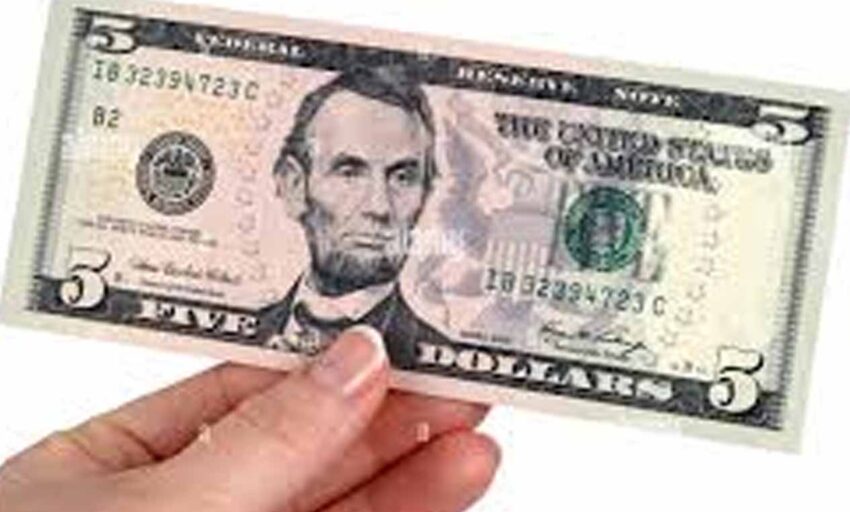
I had $5.
Exactly $5. No more. No less.
I decided I would buy bread. Just bread. It would last a couple of days if I were careful.
The store was a small neighborhood place on the corner, the kind that smelled like dust, detergent, and old cardboard. The bell above the door rang when I walked in, and the cashier looked up briefly before returning to her phone.
I grabbed the cheapest loaf of white bread from the shelf and headed to the counter, already planning how thin I would slice it.
That was when I noticed him.
He stood a few feet away from me, near the counter, holding a cheap sandwich wrapped in clear plastic. His jacket looked too thin for the cold, and his shoes were scuffed at the toes.
He was older than me, maybe late 30s or early 40s, with tired eyes and stubble along his jaw. His shoulders were hunched, like he was trying to take up as little space as possible.
“I’m sorry,” he said quietly, his voice tight with embarrassment. “I thought I had enough. I must have miscounted.”
The cashier sighed and finally put her phone down.
“You’re short $5,” she said flatly. “I can’t let you take it.”
His face turned red, the color creeping up his neck. He nodded quickly. “I understand. I’ll put it back.”
He started to hand the sandwich over, his fingers lingering on the wrapper for a second too long. Something about that moment made my chest ache. Maybe it was the way he avoided looking at anyone. Or maybe it was how carefully he apologized, as if being hungry was a personal failure.
I did not plan what happened next.
I did not weigh the consequences or think about tomorrow. I just stepped forward.
“I’ve got it,” I said.
Both of them looked at me. The cashier raised an eyebrow. The man’s eyes widened, confusion flickering across his face.
“I’ve got it,” I repeated, my voice steadier than I felt. I pulled the crumpled bill from my wallet and placed it on the counter.
“I can cover it.”
The cashier shrugged, rang it up, and slid the sandwich across the counter without another word. The moment felt strangely quiet, like the whole store was holding its breath.
The man stared at me as if I had just saved his life.
“Oh my God,” he said. “Thank you. Thank you so much.”
“It’s nothing,” I said, forcing a smile. “Really.”
He kept shaking his head. “You didn’t have to do that.”
“I know,” I replied.
He took the sandwich, his hands trembling slightly, and looked at me again. “I won’t forget this,” he said softly.
I nodded, unsure what to say. I picked up my loaf of bread, placed it back on the shelf in the grocery section, and walked out of the store before I could change my mind.
The cold air hit my face as soon as I stepped outside. I hugged my jacket tighter around myself and started the walk back to my apartment. With every step, reality crept back in.
What had I done?
I had just given away my last $5. The money I needed for food. The money I did not have to spare. My stomach growled, as if to remind me of my mistake.
I felt equal parts stupid and strangely warm.
That warmth stayed with me as I climbed the stairs to my apartment and unlocked the door. Inside, the silence was heavy.
That night, I went to bed hungry.
I lay under my thin blanket, listening to the sounds of the building settling around me. Somewhere, a neighbor laughed. Somewhere else, a door slammed. My stomach cramped, and tears pricked at my eyes.
I wondered if kindness was a luxury I could not afford.
I wondered if I had just crossed a line between being generous and being reckless. My mind replayed the man’s face over and over, the way his eyes had softened when I paid for his sandwich. I told myself that maybe it had mattered. Maybe it had meant something.
Still, I fell asleep with a knot of fear in my chest.
The next morning, pale sunlight crept through my blinds and woke me earlier than I wanted. My stomach ached, and my head felt heavy with worry. I dragged myself out of bed, already dreading the day ahead.
When I opened my door to grab the mail, something caught my eye.
There was a small folded note on the floor.
It lay just inside the doorway, as if someone had slid it under the door sometime during the night. My name was written on the front in careful handwriting.
I froze for a moment, my heart starting to pound.
I picked it up, sat down on the edge of my bed, and started reading it, not knowing it would bring me to tears.
My hands trembled as I unfolded the paper.
And that was where everything began to change.
The paper was thin and creased, folded carefully like it mattered. I smoothed it out on my knee and took a breath before reading.
Seeing my name written in someone else’s hand made my throat tighten.
“I hope this finds you well. I did not want to scare you, but I needed to leave this where you would see it. You probably do not remember me as more than the man who could not afford a sandwich last night.”
I swallowed hard.
Of course, I remembered him.
“My name is Thomas,” the note continued. “I was embarrassed yesterday, more than I can explain. I have not needed help like that in a long time, and when you stepped forward and said, ‘I’ve got it,’ it felt like something broke open inside me.”
My vision blurred, and I wiped at my eyes with the heel of my hand.
“I want you to know that your kindness mattered. You did not just buy me food. You reminded me that I am still seen.”
I paused there, pressing the paper to my chest for a moment.
My apartment felt very quiet, like it was listening with me.
“I do not know your situation,” Thomas had written, “but I could tell by the way you hesitated that you did not have much to spare. I cannot stop thinking about that. I have been where you are. I am still there in many ways.”
My heart pounded faster as I read on.
“I lost my job three months ago when the warehouse shut down. I have been doing odd work when I can, but it has not been enough. Yesterday, that sandwich was going to be my only meal.”
Tears slipped down my cheeks, falling onto the paper.
“This morning, I found work.”
I blinked, rereading the sentence to make sure I had not imagined it.
“I was offered a short-term job starting today. It is not much, but it is something. Enough that I can pay back what you gave me and then some.”
My hands started shaking.
“Please accept this as a thank-you, not a debt,” the note said. “If you are ever able, pass the kindness on. If not, that is okay too. You have already done more than enough.”
At the bottom of the note was a folded corner.
Tucked inside was cash.
I unfolded it slowly, afraid it might disappear. $20 bills. Five of them.
$100.
I broke down then, crying in a way I had not allowed myself to in weeks. I cried for the relief that washed over me, for the fear that finally loosened its grip, and for the strange, quiet beauty of being reminded that people could still be good to each other.
I sat there for a long time, the note spread open in my lap, the money resting beside it.
Eventually, my tears slowed, and I laughed softly at myself.
Yesterday, I had gone to bed hungry, convinced I had made a foolish choice. This morning, I felt fuller than I had in a long time.
I used part of the money that day to buy groceries. Real groceries. Fresh fruit, pasta, rice, and even a small carton of ice cream as a quiet celebration. I paid my rent on time. I breathed easier.
But more than that, something inside me shifted.
A week later, I saw Thomas again.
I was walking back from the café after a long shift when I spotted him across the street, wearing the same thin jacket but standing a little straighter. He was talking to another man, laughing. When he noticed me, his face lit up.
“Diana,” he called.
I crossed the street, smiling. “Thomas.”
He looked nervous for a moment, then pulled me into a brief, careful hug. “I’m glad I ran into you,” he said. “I wasn’t sure I’d see you again.”
“I’m glad too,” I replied.
We stood there for a minute, awkward but warm. He told me the job was temporary but steady. I told him I had picked up more hours at work. We did not talk about the money again. We did not need to.
As we stood there, something that had been sitting in the back of my mind finally surfaced.
“Can I ask you something?” I said.
“Of course,” he replied.
I hesitated, then smiled a little.
“How did you know my name and where I live?”
He let out a soft breath, almost like he had been waiting for the question. “I went back to the store the next morning,” he said. “I asked the cashier if there was any way to thank you. I didn’t want your information. I swear. I just wanted to leave a note.”
I watched his face as he spoke, the sincerity in his eyes.
“She told me your name,” he continued. “She said you came in often, that you lived upstairs. She offered to slide the note under your door herself. I never saw where you lived.”
Something in my chest loosened.
“Thank you for telling me,” I said quietly.
He nodded. “I wanted to do it the right way.”
Before we parted, he said, “You changed something for me, Diana. I hope you know that.”
I watched him walk away, thinking about how close I had been to walking past him in that store, pretending I did not notice.
That night, I taped his note to the inside of my closet door.
Whenever things got hard after that, and they did, I read it again. I reminded myself that kindness was not a luxury. It was a choice.
Sometimes a costly one, but never a wasted one.
I was 21 years old, still figuring out how to survive in a world that often felt unforgiving. But I had learned something I would carry with me forever.
Even when you have almost nothing, you can still give something that matters. And sometimes, that something finds its way back to you when you need it most.