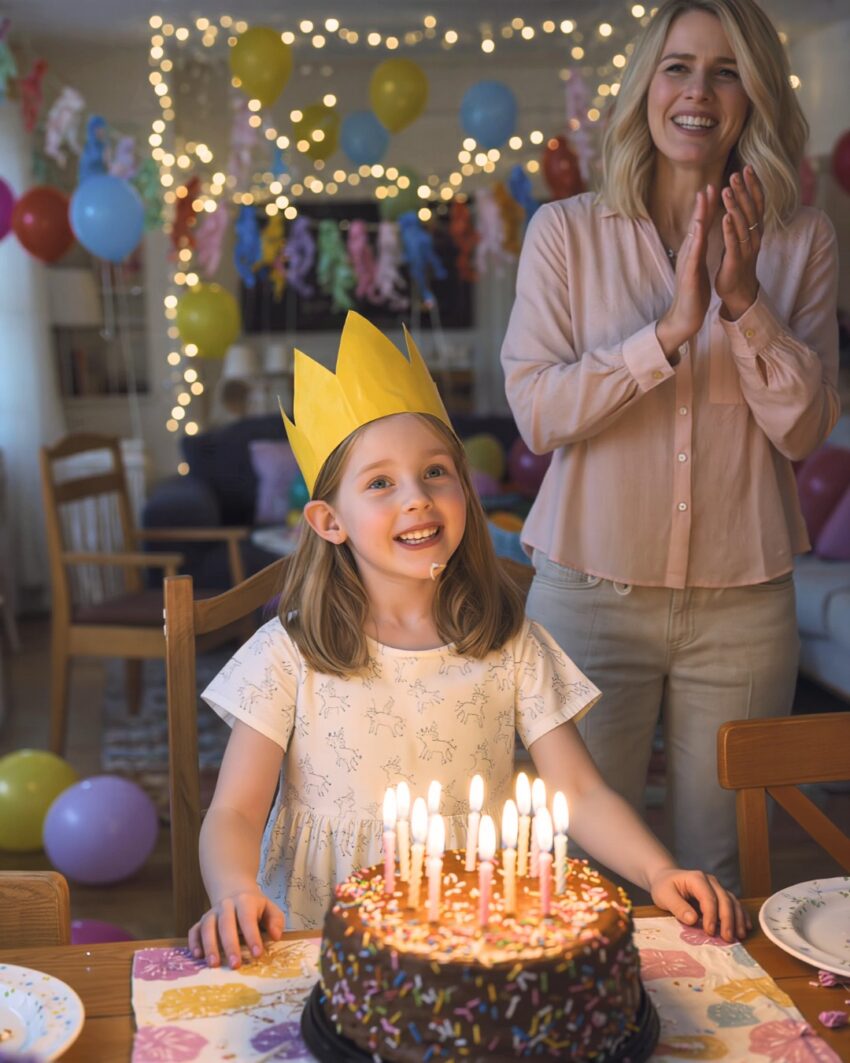
At 11:51 p.m., my living room was a freezer.
The kind of cold that feels personal, that seeps into the walls and floorboards and then into your bones, like the house has decided it’s done pretending to be a home and would rather be a walk-in morgue. Outside, the Chicago winter pressed its face against the old windows, breath fogging the glass, searching for a crack.

Inside, the only light came from the TV’s dead black screen, reflecting nothing, and the faint amber glow from the thermostat on the wall—72°F in soft numbers, a tiny digital promise that at least in here, we were safe.
And then my phone lit up.
The screen flashed in the dark like a flare. I didn’t have to pick it up to know who it was. When you’ve been trained like I have, conditioned for nearly three decades, your body recognizes the pattern before your brain does. The specific vibration. The timing. The way the silence always breaks right when you finally feel almost calm.
I reached for the phone anyway.
VENMO REQUEST FROM:
Mom
Amount: $1,850
Memo line: Kylie Sweet 26 venue deposit. Do now or we lose the date.
Below that, just three final words:
Do. It. Now.
No “please.” No “hey, I know it’s late.” No “how’s Lily, is she okay after what happened?”
Just a command, typed out from the woman who had left my seven-year-old daughter standing at a window in a pink unicorn dress for three straight hours, waiting for a grandmother who chose mimosas over her.
Two days ago.
Forty-eight hours earlier, I had watched Lily’s face go from glowingly hopeful to confused to—eventually—the slack, too-still expression of a child trying not to cry because crying might make Mommy sadder. I’d watched her check the driveway over and over, pressing her forehead against the glass until there was a little oval of fogged-up disappointment where her excitement had been.
My mother never showed. My sister never showed. No call. No text. No “sorry, something came up.” Just silence.
And now, two days later, this.
A demand for almost two grand to pay for my twenty-four-year-old sister’s “Sweet 26” party because 25 “didn’t count” due to “Mercury being in retrograde” and Kylie “not feeling aligned that year.” A sister who refused to work because customer service was “too negative for her aura,” but somehow had the energy to go to every brunch, every spa day, every weekend trip my mom could guilt someone else into funding.
It didn’t make me cry.
I didn’t rage. I didn’t start typing out the paragraph I’ve drafted and deleted a thousand times in my head—about boundaries and respect and how normal families don’t operate like this. Instead, something inside me went very, very still.
Cold. Precise.
The same place I go at work when a million-dollar shipment of anti-rejection meds goes missing in a storm over Indiana and everyone is panicking but someone has to keep their head. The space where there’s no room for feelings, only chain of custody, timing, logistics.
I unlocked my phone.
I opened Venmo.
I typed in an amount: $1.00
In the memo line, I wrote three words:
Fee for service.
My thumb hovered over “Pay” for half a second. Not because I doubted myself, but because there was something ceremonial about it. Like signing the bottom of a contract. Like drawing a line in permanent marker over an old map.
Then I hit Send.
The app chimed, polite and oblivious.
Transaction complete.
I put the phone down on the counter and walked to the front door.
The deadbolt gleamed in the dim light, the steel still bright and unscuffed. I’d had it installed that morning, the locksmith’s breath fogging in the hallway as he twisted it into place. A new key. A new lock. For the first time in my life, a solid barrier—one that wasn’t just emotional or theoretical or “you know you can always say no, sweetie.”
https://googleads.g.doubleclick.net/pagead/ads?gdpr=0&client=ca-pub-3619133031508264&output=html&h=280&adk=4062416028&adf=2527451294&pi=t.aa~a.1720809177~i.68~rp.4&w=850&fwrn=4&fwrnh=100&lmt=1770773333&rafmt=1&armr=3&sem=mc&pwprc=9520209535&ad_type=text_image&format=850×280&url=https%3A%2F%2Fmx.ngheanxanh.com%2Fuyenkok%2Fmy-family-skipped-my-7-year-olds-birthday-to-hit-brunch-then-two-days-later-my-mom-venmo-requested-1850-for-my-grown-sisters-sweet-26-i-sent-her-1-with-the-not%2F%3Ffbclid%3DIwY2xjawP4ugRleHRuA2FlbQIxMABicmlkETFDSFU5dkJXajZTUEFZSFB6c3J0YwZhcHBfaWQQMjIyMDM5MTc4ODIwMDg5MgABHrB-cJyEMMijyCRLr9CxU5MyeKeENleLPZIButPNz7sbxeDIVyhPOdNwysSb_aem_MPyml32F1Uib9EUV0bniww%23google_vignette&fwr=0&pra=3&rh=200&rw=850&rpe=1&resp_fmts=3&aieuf=1&aicrs=1&fa=27&uach=WyJXaW5kb3dzIiwiMC4xLjAiLCJ4ODYiLCIiLCIxMDkuMC41NDE0LjEyMCIsbnVsbCwwLG51bGwsIjY0IixbWyJOb3RfQSBCcmFuZCIsIjk5LjAuMC4wIl0sWyJHb29nbGUgQ2hyb21lIiwiMTA5LjAuNTQxNC4xMjAiXSxbIkNocm9taXVtIiwiMTA5LjAuNTQxNC4xMjAiXV0sMF0.&abgtt=6&dt=1770773242475&bpp=2&bdt=7904&idt=2&shv=r20260209&mjsv=m202602050101&ptt=9&saldr=aa&abxe=1&cookie=ID%3D047edbb877660eb9%3AT%3D1769733505%3ART%3D1770773179%3AS%3DALNI_MbxLUiZhQ-jXkNFU6dAVksUuZOpsA&gpic=UID%3D000012ece0e4b982%3AT%3D1769733505%3ART%3D1770773179%3AS%3DALNI_Mbbo0t1OcOYWWib3LYu9eIbNU7PIQ&eo_id_str=ID%3D25bebffa57cea215%3AT%3D1769733505%3ART%3D1770773179%3AS%3DAA-AfjY3TbHCnFyRxlxyNSCxA3hZ&prev_fmts=0x0%2C1200x280%2C1200x280%2C1349x600%2C1005x124&nras=5&correlator=3420925878294&frm=20&pv=1&u_tz=-480&u_his=3&u_h=768&u_w=1366&u_ah=728&u_aw=1366&u_cd=24&u_sd=1&dmc=4&adx=75&ady=4457&biw=1349&bih=600&scr_x=0&scr_y=2066&eid=31096621%2C95378429%2C95382067%2C95382331%2C95382339%2C95382735%2C95381976&oid=2&psts=AOrYGskUhsfwIdN4rS3MRy7ixAEEauJIallp4A7FhNnll7Qy5VtC0hna_fBsf5p0x6XNe14CyGm6lffE9V5M0gHLoCH1OunU4UfDl9eoAL1nI-QWi41Qb86jSVFZ_nVbCF4DxnsG&pvsid=6505117571151056&tmod=994225213&uas=3&nvt=1&ref=https%3A%2F%2Fl.facebook.com%2F&fc=1408&brdim=0%2C0%2C0%2C0%2C1366%2C0%2C1366%2C728%2C1366%2C600&vis=1&rsz=%7C%7Cs%7C&abl=NS&fu=128&bc=31&bz=1&pgls=CAEaBTYuOS4x&num_ads=1&ifi=7&uci=a!7&btvi=2&fsb=1&dtd=90642
I slid the deadbolt across. It punched into place with a heavy, decisive thunk, loud in the quiet house.
It sounded, to me, like a gunshot.
Like the start of something.
I thought that sound would be the end of it—that a good lock and a single dollar would be enough to close the book on whatever contract I’d been born into with my mother. I thought the worst thing that would happen next was a stream of angry texts and maybe a guilt-soaked voicemail or five.
I had no idea that twenty minutes later, the police would be on my front porch with guns drawn.
I leaned my back against the door for a second, palms flat against the cold wood, feeling the vibration of my own heartbeat through it. The house groaned as the wind hit it; this place is from the 1920s, built when insulation was more optimistic suggestion than science.
But it was mine.
That mattered more than the draft in the hallway and the way the stairs creaked in protest if you walked too quickly. After years of paying down debts that weren’t mine and renting apartments I never felt safe in, I had a deed with my name on it, a furnace that worked, and windows that—if not new—at least closed all the way.
My phone buzzed in my hand.
Then again.
Then again.
The steady, aggressive rattle of an incoming cluster of messages turned the little rectangle into a living thing, twitching in my palm.
I didn’t have to look, but I did anyway.
Mom:
You ungrateful little brat. Send that money back right now.
Mom:
Do you think this is funny? Ignoring your family? After EVERYTHING I’ve done for you?
Mom:
Open this door, Jasmine. I know you’re home. I see your car. Don’t play games with me.
I pictured her, a few miles away in her cluttered townhouse, still in the fur coat she’d worn to brunch, phone in one hand, wine glass in the other, outrage hot enough to keep her warm without a furnace. Maybe Kylie was on the couch nearby, scrolling Instagram, half listening, half letting my mother’s words wash over her like background noise.
I didn’t respond.
I also didn’t block her.
In logistics, we don’t delete data. We archive it. For investigations. For audits. For the moment six months down the line when someone swears the temperature monitor never tripped and you pull a log that proves, to the decimal, that it did.
I swiped the notifications off my screen and opened my home security app instead.
11:58 p.m.
The timestamp glowed at the top. Eight cameras. All online. All recording.
That was new too.
I’d installed the system eight hours earlier, the technician patiently explaining cloud backups and motion detection while Lily followed him around asking if the cameras could talk to each other and if they liked her dress. I’d half listened, half watched the feed on my phone, mesmerized, as each angle popped to life.
Front porch. Back alley. Living room. Kitchen. Hallway. Side yard. Basement. Nursery.
A full chain of custody for my life.
I walked the perimeter of the house now like I would walk a warehouse.
Back door: locked. I checked the knob twice, feeling the familiar click of security under my hand.
https://googleads.g.doubleclick.net/pagead/ads?gdpr=0&client=ca-pub-3619133031508264&output=html&h=280&adk=4062416028&adf=356617076&pi=t.aa~a.1720809177~i.126~rp.4&w=850&fwrn=4&fwrnh=100&lmt=1770773375&rafmt=1&armr=3&sem=mc&pwprc=9520209535&ad_type=text_image&format=850×280&url=https%3A%2F%2Fmx.ngheanxanh.com%2Fuyenkok%2Fmy-family-skipped-my-7-year-olds-birthday-to-hit-brunch-then-two-days-later-my-mom-venmo-requested-1850-for-my-grown-sisters-sweet-26-i-sent-her-1-with-the-not%2F%3Ffbclid%3DIwY2xjawP4ugRleHRuA2FlbQIxMABicmlkETFDSFU5dkJXajZTUEFZSFB6c3J0YwZhcHBfaWQQMjIyMDM5MTc4ODIwMDg5MgABHrB-cJyEMMijyCRLr9CxU5MyeKeENleLPZIButPNz7sbxeDIVyhPOdNwysSb_aem_MPyml32F1Uib9EUV0bniww%23google_vignette&fwr=0&pra=3&rh=200&rw=850&rpe=1&resp_fmts=3&aieuf=1&aicrs=1&fa=27&uach=WyJXaW5kb3dzIiwiMC4xLjAiLCJ4ODYiLCIiLCIxMDkuMC41NDE0LjEyMCIsbnVsbCwwLG51bGwsIjY0IixbWyJOb3RfQSBCcmFuZCIsIjk5LjAuMC4wIl0sWyJHb29nbGUgQ2hyb21lIiwiMTA5LjAuNTQxNC4xMjAiXSxbIkNocm9taXVtIiwiMTA5LjAuNTQxNC4xMjAiXV0sMF0.&abgtt=6&dt=1770773242525&bpp=5&bdt=7951&idt=5&shv=r20260209&mjsv=m202602050101&ptt=9&saldr=aa&abxe=1&cookie=ID%3D047edbb877660eb9%3AT%3D1769733505%3ART%3D1770773179%3AS%3DALNI_MbxLUiZhQ-jXkNFU6dAVksUuZOpsA&gpic=UID%3D000012ece0e4b982%3AT%3D1769733505%3ART%3D1770773179%3AS%3DALNI_Mbbo0t1OcOYWWib3LYu9eIbNU7PIQ&eo_id_str=ID%3D25bebffa57cea215%3AT%3D1769733505%3ART%3D1770773179%3AS%3DAA-AfjY3TbHCnFyRxlxyNSCxA3hZ&prev_fmts=0x0%2C1200x280%2C1200x280%2C1349x600%2C1005x124%2C850x280&nras=6&correlator=3420925878294&frm=20&pv=1&u_tz=-480&u_his=3&u_h=768&u_w=1366&u_ah=728&u_aw=1366&u_cd=24&u_sd=1&dmc=4&adx=75&ady=6601&biw=1349&bih=600&scr_x=0&scr_y=4202&eid=31096621%2C95378429%2C95382067%2C95382331%2C95382339%2C95382735%2C95381976&oid=2&psts=AOrYGskUhsfwIdN4rS3MRy7ixAEEauJIallp4A7FhNnll7Qy5VtC0hna_fBsf5p0x6XNe14CyGm6lffE9V5M0gHLoCH1OunU4UfDl9eoAL1nI-QWi41Qb86jSVFZ_nVbCF4DxnsG&pvsid=6505117571151056&tmod=994225213&uas=3&nvt=1&ref=https%3A%2F%2Fl.facebook.com%2F&fc=1408&brdim=0%2C0%2C0%2C0%2C1366%2C0%2C1366%2C728%2C1366%2C600&vis=1&rsz=%7C%7Cs%7C&abl=NS&fu=128&bc=31&bz=1&pgls=CAEaBTYuOS4x&num_ads=1&ifi=9&uci=a!9&btvi=3&fsb=1&dtd=M
Windows on the ground floor: latched. Pane by pane. The old wood frames shuddered with each gust of wind, but the locks held.
Thermostat: still 72°F. The furnace hummed steadily, a comforting, low industrial sound under the bones of the house.
Outside, it was ten below zero with windchill, the kind of cold that could burn exposed skin in minutes. Inside, the air was warm and faintly scented with dryer sheets and the chocolate cake Lily and I had baked together earlier that night just because. Not for anyone else.
Nice and simple, she’d insisted. No fondant. No themed toppers. Just chocolate.
“Can we put those rainbow sprinkles on top, Mommy? The ones Grandma says are tacky?”
I’d laughed and said, “We can put two handfuls of them on top if we want. This is our cake.”
In the living room, she was a small lump under her heated blanket on the couch, her curls spilling out the top like dark question marks. The TV played a menu screen in silence, a cartoon paused mid-laugh, waiting for someone to decide if we wanted to keep watching.
I walked over and knelt beside her.
Her breathing was slow and even, the long exhale of a child finally convinced that nothing bad could happen while Mommy was awake. One tiny hand clutched the corner of the blanket as if she believed it could anchor her to safety.
I tucked a curl behind her ear.
She didn’t stir.
For the first time since I’d signed the closing documents on this house, I felt an unfamiliar sensation in my chest.
Not joy. Not exactly.
Something heavier. Something like…solid ground.
I had done it.
I had drawn a hard line with my mother and not apologized for it. I had locked a door and not immediately wondered how to unlock it again in a way that wouldn’t make her cry. I had sent the money my way, with my conditions.
Fee for service.
The contract was void.
I went back to the kitchen and opened the bottle of red wine I’d been saving. “For a special occasion,” I’d said every time I passed it in the grocery store and then again when I put it on the counter this afternoon.
I guessed surviving my family without groveling qualified.
The cork popped with a soft sigh. I poured a glass and watched the liquid swirl, catching the overhead light in slow ruby arcs before settling.
I thought about every birthday party I’d bent myself into knots to make perfect while my mother criticized the tablecloth or the guest list or the fact that I’d dared to buy store-bought icing because I was exhausted from working a double. I thought of the way she’d sigh and say things like, “I suppose it’s…fine,” while Lily watched, absorbing every micro-expression.
“Can Grandma still come?” Lily had asked me that morning, standing in the kitchen in her pajamas, her party dress hanging on the back of a chair like a promise.
“She can,” I’d said carefully. “But she might not.”
“Why?”
Because some people only show up for events they can be the center of.
Because some people love the idea of grandchildren more than the work of actually caring for them.
https://googleads.g.doubleclick.net/pagead/ads?gdpr=0&client=ca-pub-3619133031508264&output=html&h=280&adk=4062416028&adf=3889131964&pi=t.aa~a.1720809177~i.181~rp.4&w=850&fwrn=4&fwrnh=100&lmt=1770773399&rafmt=1&armr=3&sem=mc&pwprc=9520209535&ad_type=text_image&format=850×280&url=https%3A%2F%2Fmx.ngheanxanh.com%2Fuyenkok%2Fmy-family-skipped-my-7-year-olds-birthday-to-hit-brunch-then-two-days-later-my-mom-venmo-requested-1850-for-my-grown-sisters-sweet-26-i-sent-her-1-with-the-not%2F%3Ffbclid%3DIwY2xjawP4ugRleHRuA2FlbQIxMABicmlkETFDSFU5dkJXajZTUEFZSFB6c3J0YwZhcHBfaWQQMjIyMDM5MTc4ODIwMDg5MgABHrB-cJyEMMijyCRLr9CxU5MyeKeENleLPZIButPNz7sbxeDIVyhPOdNwysSb_aem_MPyml32F1Uib9EUV0bniww%23google_vignette&fwr=0&pra=3&rh=200&rw=850&rpe=1&resp_fmts=3&aieuf=1&aicrs=1&fa=27&uach=WyJXaW5kb3dzIiwiMC4xLjAiLCJ4ODYiLCIiLCIxMDkuMC41NDE0LjEyMCIsbnVsbCwwLG51bGwsIjY0IixbWyJOb3RfQSBCcmFuZCIsIjk5LjAuMC4wIl0sWyJHb29nbGUgQ2hyb21lIiwiMTA5LjAuNTQxNC4xMjAiXSxbIkNocm9taXVtIiwiMTA5LjAuNTQxNC4xMjAiXV0sMF0.&abgtt=6&dt=1770773242551&bpp=4&bdt=7977&idt=4&shv=r20260209&mjsv=m202602050101&ptt=9&saldr=aa&abxe=1&cookie=ID%3D047edbb877660eb9%3AT%3D1769733505%3ART%3D1770773179%3AS%3DALNI_MbxLUiZhQ-jXkNFU6dAVksUuZOpsA&gpic=UID%3D000012ece0e4b982%3AT%3D1769733505%3ART%3D1770773179%3AS%3DALNI_Mbbo0t1OcOYWWib3LYu9eIbNU7PIQ&eo_id_str=ID%3D25bebffa57cea215%3AT%3D1769733505%3ART%3D1770773179%3AS%3DAA-AfjY3TbHCnFyRxlxyNSCxA3hZ&prev_fmts=0x0%2C1200x280%2C1200x280%2C1349x600%2C1005x124%2C850x280%2C850x280%2C850x280&nras=7&correlator=3420925878294&frm=20&pv=1&u_tz=-480&u_his=3&u_h=768&u_w=1366&u_ah=728&u_aw=1366&u_cd=24&u_sd=1&dmc=4&adx=75&ady=8563&biw=1349&bih=600&scr_x=0&scr_y=6175&eid=31096621%2C95378429%2C95382067%2C95382331%2C95382339%2C95382735%2C95381976&oid=2&psts=AOrYGskUhsfwIdN4rS3MRy7ixAEEauJIallp4A7FhNnll7Qy5VtC0hna_fBsf5p0x6XNe14CyGm6lffE9V5M0gHLoCH1OunU4UfDl9eoAL1nI-QWi41Qb86jSVFZ_nVbCF4DxnsG&pvsid=6505117571151056&tmod=994225213&uas=3&nvt=1&ref=https%3A%2F%2Fl.facebook.com%2F&fc=1408&brdim=0%2C0%2C0%2C0%2C1366%2C0%2C1366%2C728%2C1366%2C600&vis=1&rsz=%7C%7Cs%7C&abl=NS&fu=128&bc=31&bz=1&pgls=CAEaBTYuOS4x&num_ads=1&ifi=10&uci=a!a&btvi=5&fsb=1&dtd=M
Because your grandmother doesn’t think you count as a real person yet. Not until you can be useful to her.
Out loud, I’d said, “Because adults make bad choices sometimes that have nothing to do with you. But we’re having a party no matter what, okay? Because you matter.”
She’d nodded like she understood more than she should and said, “Can we still make the unicorn cake?”
We’d baked it together anyway, even after the grandparents didn’t come and the extra balloons I’d bought sagged slightly, unused. The other kids had gone home hours ago, sugar-tired and happy, their parents smiling apologetically as they left.
“Such a cute party,” one mom whispered. “Don’t worry. Kids don’t remember who didn’t show up.”
That mom was wrong.
But sitting there, watching the wine settle, I realized: maybe Lily would remember. And maybe that was okay—if she also remembered that I was there, always, that I chose her even when my own mother didn’t.
I lifted the glass, the stem cold against my fingers.
“To freedom,” I murmured, half to myself, half to the quiet house.
The hum of the furnace cut out.
Not slowed. Not cycled down like normal. Just—gone.
The overhead light flickered once, twice, and then died.
The entire house dropped into a thick, suffocating darkness so complete it felt like a physical thing.
I froze, glass hovering near my lips.
The silence that followed was not peaceful.
It was the kind of silence that comes after a trap springs shut.
For a heartbeat, I just stood there. The absence of the furnace hum was louder than any siren. The temperature difference hit almost immediately, like someone had opened every window at once.
I set the wine glass down slowly, my hand steady.
This was not a random outage.
I reached for my phone on the counter, but before my fingers closed around it, another sound sliced through the darkness.
Whoop! Whoop!
Not the distant cry of an ambulance somewhere a few streets over.
A siren. Right outside my house.
Red and blue light exploded through the front curtains, strobing across the walls in manic bursts, turning my small living room into a disorienting carnival of shadow and color. My own figure lurched and jumped against the wall, a jittering silhouette.
A voice boomed through a bullhorn, distorted but unmistakable.
https://googleads.g.doubleclick.net/pagead/ads?gdpr=0&client=ca-pub-3619133031508264&output=html&h=280&adk=4062416028&adf=3787144449&pi=t.aa~a.1720809177~i.231~rp.4&w=850&fwrn=4&fwrnh=100&lmt=1770773431&rafmt=1&armr=3&sem=mc&pwprc=9520209535&ad_type=text_image&format=850×280&url=https%3A%2F%2Fmx.ngheanxanh.com%2Fuyenkok%2Fmy-family-skipped-my-7-year-olds-birthday-to-hit-brunch-then-two-days-later-my-mom-venmo-requested-1850-for-my-grown-sisters-sweet-26-i-sent-her-1-with-the-not%2F%3Ffbclid%3DIwY2xjawP4ugRleHRuA2FlbQIxMABicmlkETFDSFU5dkJXajZTUEFZSFB6c3J0YwZhcHBfaWQQMjIyMDM5MTc4ODIwMDg5MgABHrB-cJyEMMijyCRLr9CxU5MyeKeENleLPZIButPNz7sbxeDIVyhPOdNwysSb_aem_MPyml32F1Uib9EUV0bniww%23google_vignette&fwr=0&pra=3&rh=200&rw=850&rpe=1&resp_fmts=3&aieuf=1&aicrs=1&fa=27&uach=WyJXaW5kb3dzIiwiMC4xLjAiLCJ4ODYiLCIiLCIxMDkuMC41NDE0LjEyMCIsbnVsbCwwLG51bGwsIjY0IixbWyJOb3RfQSBCcmFuZCIsIjk5LjAuMC4wIl0sWyJHb29nbGUgQ2hyb21lIiwiMTA5LjAuNTQxNC4xMjAiXSxbIkNocm9taXVtIiwiMTA5LjAuNTQxNC4xMjAiXV0sMF0.&abgtt=6&dt=1770773242569&bpp=3&bdt=7993&idt=3&shv=r20260209&mjsv=m202602050101&ptt=9&saldr=aa&abxe=1&cookie=ID%3D047edbb877660eb9%3AT%3D1769733505%3ART%3D1770773179%3AS%3DALNI_MbxLUiZhQ-jXkNFU6dAVksUuZOpsA&gpic=UID%3D000012ece0e4b982%3AT%3D1769733505%3ART%3D1770773179%3AS%3DALNI_Mbbo0t1OcOYWWib3LYu9eIbNU7PIQ&eo_id_str=ID%3D25bebffa57cea215%3AT%3D1769733505%3ART%3D1770773179%3AS%3DAA-AfjY3TbHCnFyRxlxyNSCxA3hZ&prev_fmts=0x0%2C1200x280%2C1200x280%2C1349x600%2C1005x124%2C850x280%2C850x280%2C850x280%2C850x280&nras=8&correlator=3420925878294&frm=20&pv=1&u_tz=-480&u_his=3&u_h=768&u_w=1366&u_ah=728&u_aw=1366&u_cd=24&u_sd=1&dmc=4&adx=75&ady=9972&biw=1349&bih=600&scr_x=0&scr_y=7575&eid=31096621%2C95378429%2C95382067%2C95382331%2C95382339%2C95382735%2C95381976&oid=2&psts=AOrYGskUhsfwIdN4rS3MRy7ixAEEauJIallp4A7FhNnll7Qy5VtC0hna_fBsf5p0x6XNe14CyGm6lffE9V5M0gHLoCH1OunU4UfDl9eoAL1nI-QWi41Qb86jSVFZ_nVbCF4DxnsG&pvsid=6505117571151056&tmod=994225213&uas=3&nvt=1&ref=https%3A%2F%2Fl.facebook.com%2F&fc=1408&brdim=0%2C0%2C0%2C0%2C1366%2C0%2C1366%2C728%2C1366%2C600&vis=1&rsz=%7C%7Cs%7C&abl=NS&cms=2&fu=128&bc=31&bz=1&pgls=CAEaBTYuOS4x&num_ads=1&ifi=11&uci=a!b&btvi=6&fsb=1&dtd=M
“Police! Occupant of 2408 Maple Street!
Exit the residence with your hands in the air. Do it now!”
My body moved into that cold, gray space again. Emergency protocol.
At work, if a shipment goes missing, you don’t scream. You don’t run around the warehouse waving your arms. You check the logs. You lock down access. You establish the timeline.
I looked at the dead thermostat on the wall. No numbers. No light.
But I didn’t need it to tell me what my skin already knew: the temperature was falling fast. Faster than it should, even with the furnace off.
Something else was wrong.
I grabbed my phone. No power meant my Wi-Fi was out, but my security system had battery backup and LTE. I opened the app with muscle memory, thumb gliding through the screens in the dark.
The cameras were still recording.
Front yard: two cruisers, lights spinning, front grill pushed up to my curb. Three officers in the yard, silhouettes thrown against the snow. Weapons drawn.
Side yard: nothing.
Back alley: nothing human. But next to the gas meter, the metal casing hung slightly askew.
My stomach dropped.
Someone had physically tampered with my gas line.
Not someone.
My mother.
I didn’t have proof yet, but I didn’t need the kind they’d accept in court to know it. This was her style: create an emergency, then show up as the savior. Or, in this case, send someone else to do it for her.
On the couch, Lily sat bolt upright, sleep ripped from her like a bandage. The red and blue lights painted her face in lurid stripes, wide eyes reflecting every flash.
“Mommy?” Her voice was a small, cracking thing. “What’s happening?”
I went to her immediately, dropping into a crouch so I wasn’t looming.
“It’s okay, baby,” I said, running a hand over her hair, the curls already cold under my palm. “It’s just some loud noises outside. We’re going to step out for a minute, okay?”
Her teeth chattered once. The blanket around her shoulders crackled with static.
“It’s cold,” she whispered.
“I know,” I said. “Keep the blanket around you. Hold onto it tight.”
Another thunderous knock rattled the front door.
“Open the door or we will breach!”
The authoritative cadence of it cut through any temptation to stall. I’d worked with enough law enforcement on controlled deliveries and diverted shipments to know the difference between a welfare check and a high-risk situation.
They thought there was danger inside.
They thought they were walking into a hostage situation.
Someone had told them I was the hazard.
I slid the deadbolt back, the lock that had comforted me just minutes earlier suddenly a formality, and pulled the door open.
Blinding white light hit me from two angles, the harsh beams mounted on the cruisers flaring straight into my eyes. For a second, everything was just white.
“Hands! Let me see your hands!”
I raised them high, fingers spread.
Shapes resolved through the glare: three officers, two behind open car doors using them as shields. One at the foot of my steps, gun out but angled down, ready to snap up at any sudden movement. Snow swirled in the air between us, catching the lights like falling sparks.
“I am unarmed!” I shouted, clear and loud, like a script. “I am exiting the house with my daughter!”
Behind me, I felt Lily’s small fingers hook into the back of my sweater. She was clinging without really realizing it, instinct pulling her toward the nearest safe thing—me.
The wind hit us like a shove as we stepped onto the porch. Ten below, at least. The cold knifed straight through my thin pajamas, cutting past clothing to skin, past skin to bone.
And beyond the cars, wrapped in a thick fur coat, perfectly warm, perfectly safe, was my mother.
Beatrice looked like she’d walked out of a different movie. Her hair was styled, soft waves not yet surrendered to the humidity of her own drama. The coat—real fur, bought with someone else’s money in some other year when I’d been too exhausted to fight about statements—hugged her shoulders.
She wasn’t cowering. She wasn’t worried.
She was pointing.
“That’s her!” she shrieked, voice shrill and bright. “Officer, that’s her! She has a knife! She’s on drugs! She’s holding my granddaughter hostage! Please, don’t let her hurt the baby!”
Her performance was flawless.
Face twisted in anguish, tears glistening under the strobes, one hand pressed to her chest like she could barely stand the pain of it. She looked like a woman who’d rushed into the night in fear for a beloved child, not a woman who’d skipped a seven-year-old’s party for eggs benedict and bottomless mimosas.
For a second, our eyes met over the chaos.
And the mask slipped.
Only for a heartbeat, but I saw it: the small, tight, satisfied smile. A flicker of triumph in her gaze, a private message.
You thought a lock could stop me?
The officer at the foot of the stairs took them two at a time, closing the distance between us. He grabbed my wrist and spun me around, pushing me forward until my chest hit the siding of my own house.
“Turn around. Do it now,” he barked.
My cheek scraped the rough wood. Snowflakes stung the side of my face. Lily screamed, the sound high and raw.
“Mommy!”
“Mommy’s okay,” I called over my shoulder, trying to keep my voice steady and calm for her sake, even as metal clicked around my wrists.
Not the solid reassurance of the deadbolt.
Handcuffs.
“I’ve got the child!” my mother shouted, taking a step forward like a vulture swooping toward something wounded. “Grandma’s here, baby. Grandma saved you from the bad mommy.”
The words landed like physical blows.
Bad mommy.
That was the role she’d cast me in tonight. The dangerous one. The unstable one. The one who needed to be stopped at all costs.
The officer’s gloved hands patted me down, quick, efficient movements over my sides, down my legs, between my shoulders.
“Spread your feet,” he ordered. “Do it now.”
I did.
“You’re making a mistake!” I said, not pleading, not begging, just stating facts into the freezing air. “I don’t have a weapon. I’m not high. My mother called you with a lie.”
“She’s unstable!” Beatrice sobbed behind me, just loud enough to carry. “Look at her eyes! She’s having a psychotic break. She’s been getting worse for weeks. I begged her to get help.”
Psychotic break.
That was one of her favorites. It neatly accomplished everything she needed.
If I was crazy, then any story I told about her was a delusion. Any boundaries I set were overreactions. Any attempt I made to separate myself from her became evidence of instability.
I closed my eyes against the flashing lights for a moment, because if I looked at her much longer, I wasn’t sure which of us they’d end up cuffing.
And in that brief closed-eyelid darkness, my mind did what it had been trained to do under stress.
It pulled records.
I wasn’t on my porch. I was eighteen years old again, standing in our old kitchen with its yellowing vinyl floor and the fridge covered in fast-food magnets. I was holding a letter from a student loan provider that said, in polite, devastating print:
APPLICATION DENIED.
I had a scholarship to my dream school. A partial one, but still. I’d worked for it. Late nights studying after shifts at the grocery store, extra credit projects, hours of volunteer work because “colleges love that kind of thing.”
All I needed was a small loan to cover housing. A place to sleep that wasn’t the couch in our living room.
I didn’t have any debt. I didn’t even have a damn credit card.
But the letter said my debt-to-income ratio was too high.
I’d stood there, reading those words again and again, feeling them land in my stomach like stones. Too high. Too high. Too high.
A week later, I’d gone searching for a stapler in my mother’s desk drawer and found the statements instead.
Five credit cards.
All opened in my name.
All opened the day I turned eighteen.
Total balance: $65,000.
Designer handbag stores. Fancy salons. Online retailers. “Family expenses.” A suspicious number of restaurant charges on days I knew we’d eaten at home because I’d cooked.
When I’d confronted her, shaking, statements spread on the table like evidence in a crime drama, she’d reacted exactly as she always did.
She’d crumpled.
She’d collapsed to her knees, sobbing so violently it looked like a medical emergency.
“I did it to keep us afloat,” she’d wailed. “To keep the lights on. To put food in your mouth. How dare you act like you’re some innocent little angel? Do you know how hard it is to be a single mother? You’d send your own mother to prison over money? You’d ruin the family over numbers?”
It hadn’t mattered that the charges included spa packages and a weekend at a lakeside resort I’d never seen.
What mattered was the story.
Good daughter versus bad daughter. Grateful versus ungrateful. Family versus outsiders.
If I reported her, I’d be handing my own mother to the wolves of the system that had “always been against us.” If I refused, well, then I was a good daughter. I understood. I was loyal.
So I didn’t go to college.
I went to work in a warehouse.
Ten years of scanning barcodes, lifting pallets, and memorizing shipping lanes. Ten years of overtime and double shifts, “just for a while” until things got better.
Ten years of my youth poured into minimum monthly payments for purses I’d never carried and dinners I’d never eaten.
“Ma’am,” the officer’s voice snapped me back to the present, to the biting cold and the sirens and the weight of metal around my wrists. “Do you have anything sharp on you? Needles? Blades?”
Behind him, my mother’s tears had shifted. The sound was different now, less genuine fear, more the high-pitched whine of a performance reaching its peak.
“Be gentle!” she cried. “She’s not herself. She needs to be…committed.”
Committed.
Institutionalized.
Removed.
Her endgame had always been control. Not just of me, but of the story.
For a moment, I saw myself the way she wanted everyone else to see me: wild-eyed, unstable, unfit. A dangerous mess of a woman who couldn’t be trusted with something as fragile as a child.
And then the wind gusted, slicing around the corner of the house and straight through my thin clothes, and something in me crystallized.
The fear evaporated.
What was left was clarity. Cold, hard, familiar clarity.
In shipments, you don’t argue emotionally.
You prove.
You establish the chain of custody. You show the logs.
I straightened, as much as the cuffs and the officer’s grip allowed.
https://googleads.g.doubleclick.net/pagead/ads?gdpr=0&client=ca-pub-3619133031508264&output=html&h=280&slotname=4515924456&adk=3615387599&adf=2717438171&pi=t.ma~as.4515924456&w=850&fwrn=4&fwrnh=100&lmt=1770773440&rafmt=1&format=850×280&url=https%3A%2F%2Fmx.ngheanxanh.com%2Fuyenkok%2Fmy-family-skipped-my-7-year-olds-birthday-to-hit-brunch-then-two-days-later-my-mom-venmo-requested-1850-for-my-grown-sisters-sweet-26-i-sent-her-1-with-the-not%2F%3Ffbclid%3DIwY2xjawP4ugRleHRuA2FlbQIxMABicmlkETFDSFU5dkJXajZTUEFZSFB6c3J0YwZhcHBfaWQQMjIyMDM5MTc4ODIwMDg5MgABHrB-cJyEMMijyCRLr9CxU5MyeKeENleLPZIButPNz7sbxeDIVyhPOdNwysSb_aem_MPyml32F1Uib9EUV0bniww%23google_vignette&fwr=0&fwrattr=true&rpe=1&resp_fmts=3&aieuf=1&aicrs=1&uach=WyJXaW5kb3dzIiwiMC4xLjAiLCJ4ODYiLCIiLCIxMDkuMC41NDE0LjEyMCIsbnVsbCwwLG51bGwsIjY0IixbWyJOb3RfQSBCcmFuZCIsIjk5LjAuMC4wIl0sWyJHb29nbGUgQ2hyb21lIiwiMTA5LjAuNTQxNC4xMjAiXSxbIkNocm9taXVtIiwiMTA5LjAuNTQxNC4xMjAiXV0sMF0.&abgtt=6&dt=1770773237594&bpp=3&bdt=3018&idt=3&shv=r20260209&mjsv=m202602050101&ptt=9&saldr=aa&abxe=1&cookie=ID%3D047edbb877660eb9%3AT%3D1769733505%3ART%3D1770773179%3AS%3DALNI_MbxLUiZhQ-jXkNFU6dAVksUuZOpsA&gpic=UID%3D000012ece0e4b982%3AT%3D1769733505%3ART%3D1770773179%3AS%3DALNI_Mbbo0t1OcOYWWib3LYu9eIbNU7PIQ&eo_id_str=ID%3D25bebffa57cea215%3AT%3D1769733505%3ART%3D1770773179%3AS%3DAA-AfjY3TbHCnFyRxlxyNSCxA3hZ&prev_fmts=0x0%2C1200x280%2C1200x280%2C1349x600%2C1005x124%2C850x280%2C850x280%2C850x280%2C850x280%2C850x280&nras=8&correlator=3420925878294&frm=20&pv=1&u_tz=-480&u_his=3&u_h=768&u_w=1366&u_ah=728&u_aw=1366&u_cd=24&u_sd=1&dmc=4&adx=75&ady=16365&biw=1349&bih=600&scr_x=0&scr_y=13992&eid=31096621%2C95378429%2C95382067%2C95382331%2C95382339%2C95382735%2C95381976&oid=2&psts=AOrYGskUhsfwIdN4rS3MRy7ixAEEauJIallp4A7FhNnll7Qy5VtC0hna_fBsf5p0x6XNe14CyGm6lffE9V5M0gHLoCH1OunU4UfDl9eoAL1nI-QWi41Qb86jSVFZ_nVbCF4DxnsG&pvsid=6505117571151056&tmod=994225213&uas=1&nvt=1&ref=https%3A%2F%2Fl.facebook.com%2F&fc=1920&brdim=0%2C0%2C0%2C0%2C1366%2C0%2C1366%2C728%2C1366%2C600&vis=1&rsz=%7C%7CeEbr%7C&abl=CS&pfx=0&fu=128&bc=31&bz=1&pgls=CAEaBTYuOS4x&ifi=5&uci=a!5&btvi=7&fsb=1&dtd=M
“Officer,” I said, my voice suddenly calm and professional, the way it is when I’m on a conference call with three different time zones and a storm is shutting down half the Midwest. “I am not unstable. I am not high. And I can prove it.”
He hesitated, eyes flicking to my mother, to my daughter, back to me.
“How’s that?” he asked cautiously.
“In my right coat pocket,” I said. “There is an iPhone 15 Pro. It is currently recording audio. It is also the master control for the cloud security system I installed eight hours ago.”
My mother reacted instantly.
“Don’t listen to her!” she shrieked, lunging forward before a younger officer put a hand out to stop her. “She’s trying to hack something! She’s deleting the evidence! Smash the phone! She’s dangerous with technology!”
Dangerous with technology.
That one might’ve actually made me laugh if my hands weren’t numb.
The sergeant—the older one, the one with the calm eyes that had been taking everything in—ignored her. He reached carefully into my pocket and pulled out the device.
“Unlock it,” he said.
“Hold it up to my face.”
He did. The screen recognized me instantly and flicked open.
“Open the blue app,” I instructed. “Go to ‘Live View.’ Then scroll back fifteen minutes. Start at 11:45 p.m. Establish the timeline.”
My voice sounded detached to my own ears, like I was giving instructions on a training video.
He tapped the screen, thumb moving slowly.
From the angle I had, pressed against the siding, I could see the reflection of the footage in his eyes more than on the display, little squares of movement flickering.
He watched as 11:50 p.m. played. Me on the couch, in pajamas, scrolling on my phone, the TV glowing softly in the background. No knife. No erratic pacing. No drugs.
11:55 p.m. Me getting up, checking the front door, glancing through the peephole, then walking to the kitchen and opening the wine. Pouring a glass. Standing for a second, just…breathing.
Midnight. The overhead light flickering. The exact moment the furnace cut out, the hum stopping.
My shoulders stiffening.
Me moving toward the couch, scooping up my sleeping daughter, wrapping the blanket tighter around her.
No shouting. No violence. No visible drugs. The most threatening object in the frame was a bottle of Merlot.
He watched it twice.
By the end of the second replay, the tension had drained from his stance. His grip on my arm relaxed.
He looked up at the dark house. At my bare feet in the snow. At my daughter, shivering with her blanket on the edge of the porch.
Then his gaze shifted to my mother.
She was still crying, but the sound had changed again. Pitch climbing, tone sharpening. Less grief, more…panic.
“She doctored it,” she insisted, voice breaking. “She’s a tech genius. She faked the footage. There was a knife. There were pills. I saw—”
“Beatrice,” the sergeant said.
He didn’t call her ma’am this time.
“Step back,” he said. “Now.”
Her mouth snapped shut.
He turned back to me, holstering his weapon.
The key jingled softly as he pulled it from his belt and unlocked the cuffs. The metal fell away from my wrists, leaving angry red grooves and an almost overwhelming rush of blood back into my fingers.
“I’m sorry, ma’am,” he said. And this time, I could hear actual apology in it, not just the script. “We received a credible hostage threat.”
“It wasn’t credible,” I said, rubbing my wrists. “It was a diversion.”
I nodded toward the side of the house where the gas meter sat.
“Before you leave, document the gas line. The furnace didn’t fail on its own. It was shut off manually three minutes before you arrived. That’s malicious property damage and child endangerment.”
He frowned, turned, and motioned to one of the other officers.
“Check the meter,” he ordered. “Look for tampering.”
My mother went still.
The crying stopped mid-sob, like someone had hit pause. Her eyes darted toward the side yard, toward the alley where she’d have had to walk to get to the gas line.
For a second, I let myself feel a flicker of triumph.
Facts. Evidence. Video. Surely that would be enough.
Surely this time, reality would win.
Then she recalibrated.
It was subtle, the way she straightened her shoulders, smoothed a hand down the front of her coat as if brushing imaginary lint away. The way the tears dried up instantly.
“You’re absolutely right, officer,” she said, her voice shifting into a new register, smooth and grave. “Whatever happened to the gas line is…tragic. But the fact remains, this house has no heat. It is ten below zero. Under Illinois law, you can’t leave a child in an uninhabitable home.”
The words “Illinois law” were like keys in a lock.
She’d done her homework.
My gaze snapped to the thermostat visible through the open front door.
The display had flickered back to life on backup power. 52°F. Falling.
My stomach lurched.
She had created an emergency, and now she was weaponizing the rules meant to protect people from emergencies.
“I have space heaters,” I said quickly. “Blankets. We’ll go to a hotel.”
“With what car?” she asked sweetly.
I looked past the cruisers to where my old Toyota sat at the curb.
The front tires sagged, rubber pooling against the snow. Slashed.
Of course.
“Officer,” my mother said, seizing the opening like a seasoned trial lawyer. “I am this child’s grandmother. I have a warm car, a safe home, heat, food. If you leave her here and she gets hypothermia…” She let that word hang in the air, heavy. “Well. I’d hate to see a good officer pulled into a negligence lawsuit. Or worse.”
The sergeant hesitated.
Policy. Liability. Procedures. I could see the calculations flickering behind his eyes like a spreadsheet.
“Ma’am,” he said finally, voice tight. “I can’t leave a minor in a freezing house without a way for you to transport her somewhere warm.”
My mother took a step toward Lily, face softening into the practiced, perfect expression of concerned grandmother.
“Come here, sweetheart,” she cooed. “Let Grandma take you home. We’ll make hot cocoa. We’ll get your room ready. You’ll be safe with me.”
Tomorrow, she’d be at the courthouse, filing for emergency custody. She’d bring photos from tonight—blurry printouts of red and blue lights—and talk about how she’d always known I was unstable, how she’d begged me to get help.
She moved closer, arms outstretched.
I stepped in front of Lily.
I didn’t raise my voice.
I didn’t shove.
I just…thought like the person I’d been forced to become. The woman who’d learned the hard way that sometimes surviving doesn’t mean convincing people you’re innocent—it means proving the other side is guilty.
“Officer,” I said, meeting his eyes. “You cannot release my child to this woman.”
My mother laughed, a sharp, disbelieving bark.
“Oh, now I’m the criminal?” she said. “A grandmother trying to save her grandbaby is a criminal?”
“A suspect,” I corrected quietly.
I reached into the inside pocket of my coat, the one the officer hadn’t checked because it was zipped and flush against me.
I pulled out a sealed envelope.
Stamped across the front, in unmistakable block letters:
U.S. Postal Inspection Service
The sergeant took it from me, brow furrowing. He tore it open with gloved fingers, scanning the first page quickly.
“I filed a report with them eighteen months ago,” I said. “Aggravated identity theft. Wire fraud. She stole over a hundred thousand dollars using my name. Opened new credit lines. Took out loans. When she started using the mail as part of the scheme—sending forged documents through USPS—it became federal.”
The younger officer returned from the side yard, breath fogging in front of his face.
“Meter’s been tampered with,” he reported. “Looks like someone pulled it. Fresh shoe prints in the snow, too. Small. Woman’s size, probably.”
The sergeant’s jaw tightened.
On the paper in his hand, the words were there in black and white. I knew what that document contained; I’d read it enough times to memorize the gist even without seeing the exact phrasing.
Recommendation of prosecution.
Active warrant.
Name: Beatrice Allen.
“Dispatch,” the sergeant said into his radio, voice suddenly very formal. “Run a check on a Beatrice Allen. Date of birth—” He glanced at the page. “—June 4, 1965. Possible active federal warrant. Confirm.”
The silence that followed was short.
Too short for my mother’s comfort.
“Confirmed,” crackled back from the radio. “Active federal warrant on that subject. Do you require backup?”
The sergeant looked up slowly.
He turned fully toward my mother.
“Beatrice Allen,” he said, and there was no hesitation in it now. “Turn around. Hands behind your back.”
Her face crumpled, but not in the way it had when she’d been performing grief.
This was raw. Shocked.
“You trapped me,” she hissed, eyes locking on me over the sergeant’s shoulder.
“No,” I said.
I was so tired my voice came out almost gentle.
“I audited the books.”
She took a step back like she might run.
The second officer was there in an instant, his grip firm on her arm.
The cuffs clicked around her wrists.
She didn’t look like a grieving grandmother then. She didn’t look like a victim. She looked like exactly what she was: a woman who had spent decades treating other people’s lives like open accounts, shocked that the overdraft notice had finally arrived.
Lily made a small sound behind me, somewhere between a question and a whimper.
I turned and crouched again, pulling her close, her blanket-wrapped body pressing into my chest like a space heater that still trusted me.
“Is Grandma going to jail?” she whispered into my shoulder.
“Yes,” I said.
There are times to sugarcoat things for children. Times to soften. Times to say, “Grandma is…going away for a while.”
This wasn’t one of those times.
“Is she coming back?” she asked.
The cruisers’ lights painted the snow in pulses of blue and red as they loaded my mother into the back of one of the cars. Her mouth moved constantly, shouting something I couldn’t hear through the closed window. Maybe my name. Maybe curses. Maybe both.
“No,” I said.
I kissed the top of Lily’s head, feeling the cold gone from her hair now that we were back in the doorway, the faint heat of the house starting to fight back.
“She’s not coming back,” I said. “Not to this house. Not to you.”
The sergeant stayed long enough to have his team document the gas meter, take photos of the footprints, make notes about the slashed tires. He reopened the valve, and a few minutes after they left, the furnace roared back to life, a great mechanical exhale under the floor.
Warm air rushed through the vents, tentatively at first, then stronger.
I walked the perimeter again, not because I didn’t trust the repairs, but because my muscles didn’t yet understand that the emergency was over. Back door. Windows. Thermostat, now climbing: 54°F. 58°F. 61°F.
Lily fell asleep on the couch again, this time with her head in my lap, one hand tangled in the hem of my sweater like she meant to anchor us together.
I sat there in the dim, furnace-warmed light, the house creaking and settling around us, my wrists throbbing gently where the cuffs had been.
I thought about all the times I’d tried to survive by proving I wasn’t the things my mother said I was.
Not crazy. Not selfish. Not ungrateful. Not a bad daughter.
How I’d pointed to my straight-A report cards and my spotless attendance and my overtime paychecks like exhibits in a trial where the jury had already been bribed.
I’d thought if I could just be good enough—calm enough, reasonable enough, forgiving enough—then the story she told about me would change.
Tonight, I finally stopped arguing with her narrative.
I’d chosen a different strategy.
I hadn’t survived by proving I was a saint.
I’d survived by proving she was a criminal.
Sometimes, the only way to break an imaginary leash is to show everyone the hands that put it there.
The next morning, the snow in front of the house showed a messy record of the night before—boot prints, tire tracks, a churned-up patch where the cruiser had idled.
I took a picture of it through the window.
Chain of custody.
Not because I thought I’d need it in court—the federal case would handle itself now—but because I wanted something tangible to remind myself, on the days I’d inevitably doubt myself, that I hadn’t imagined it.
That it had happened. That I’d stood in the snow in my pajamas and said “no more,” and the world had, for once, backed me up instead of her.
Later, when Lily was at school and the house was quiet, I opened my Venmo app.
The $1 transaction sat there in the history section, neat and small.
To: Mom — Fee for service.
It looked almost laughably insignificant, just a single line among dozens of other digital exchanges. Coffee money for a coworker. Rent. Groceries split with a friend.
But I knew what it represented.
Twenty-nine years of training.
Sit. Stay. Pay.
A service dog doesn’t know the leash is imaginary. Not until something jolts it hard enough to make it question everything.
For me, that something was my daughter—standing in a window, watching a driveway that would never fill, holding a gift bag she’d decorated herself for a grandmother who was already on her second mimosa across town.
I scrolled past the transaction, thumb hovering over the “Notes” icon for a moment.
Then I left it alone.
Some records shouldn’t be edited.
They should sit there, unchanged, a tiny line item in the ledger of a life.
Proof that at least once, when presented with the old command, I’d finally done something else.
THE END.