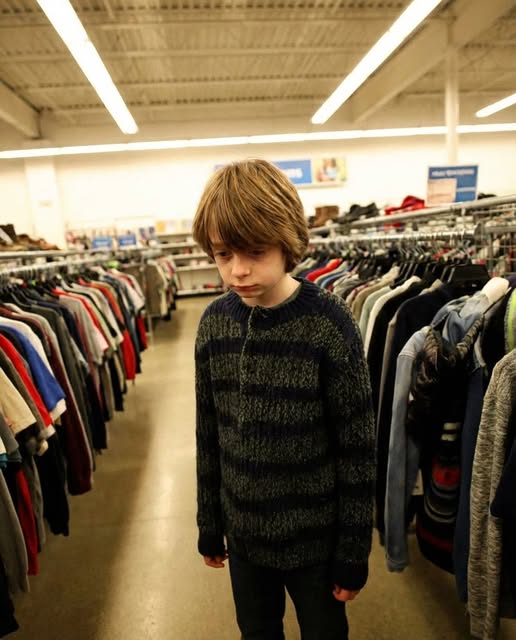
I never imagined I’d break down in tears over a secondhand winter coat. Standing in a thrift store aisle, holding a thick navy jacket that cost just $20, I begged my husband to reconsider—for the sake of our seven-year-old son, who shivered in a worn hoodie and struggled to walk with his injured leg. When my husband refused and said we were “broke,” I thought it was cruelty or indifference. The look on our son’s face stayed with me long after we left the store, and on the drive home, a quiet fear settled in: something was terribly wrong, and I didn’t know what it was.
Over the next months, the tension only grew. My husband became obsessively careful with money, cut back on heat and groceries, and avoided every question about where his paychecks were going. He worked longer hours, lost weight, and locked the garage door whenever he came home late. My thoughts spiraled into dark places—debt, secrets, worst-case scenarios. That night, unable to sleep and haunted by the memory of that coat, I found a small key hidden in his nightstand and realized it unlocked the garage. What I found inside changed everything.
Beneath a tarp and inside a metal lockbox were not secrets or savings for himself, but paperwork—bank statements, pay stubs, and medical forms with our son’s name printed at the top. The balance had been drained to zero that very morning. The money had gone to pay, in full, for a surgery doctors said could finally help our son walk without pain—a surgery insurance had denied us again and again. Tucked alongside the papers was a small notebook detailing months of night shifts at a warehouse, skipped meals, and notes like “Liam’s coat: wait” and “Must pay the doctor first.” In that moment, my anger collapsed into grief and awe.
When my husband came home and saw what I’d found, he didn’t argue. He simply explained that he was afraid to give me hope until it was real, afraid of breaking us again if it fell through. The $20 coat wasn’t refusal—it was sacrifice. Later that day, a neighbor quietly left a box on our porch with warm clothes and a brand-new parka for our son, as if kindness itself had been listening. That night, as we told our son about his upcoming surgery, I realized how easy it is to mistake silence for selfishness. Sometimes love doesn’t look gentle or reassuring—it looks like exhaustion, skipped meals, and saying “no” to something small so you can say “yes” to something that changes everything.