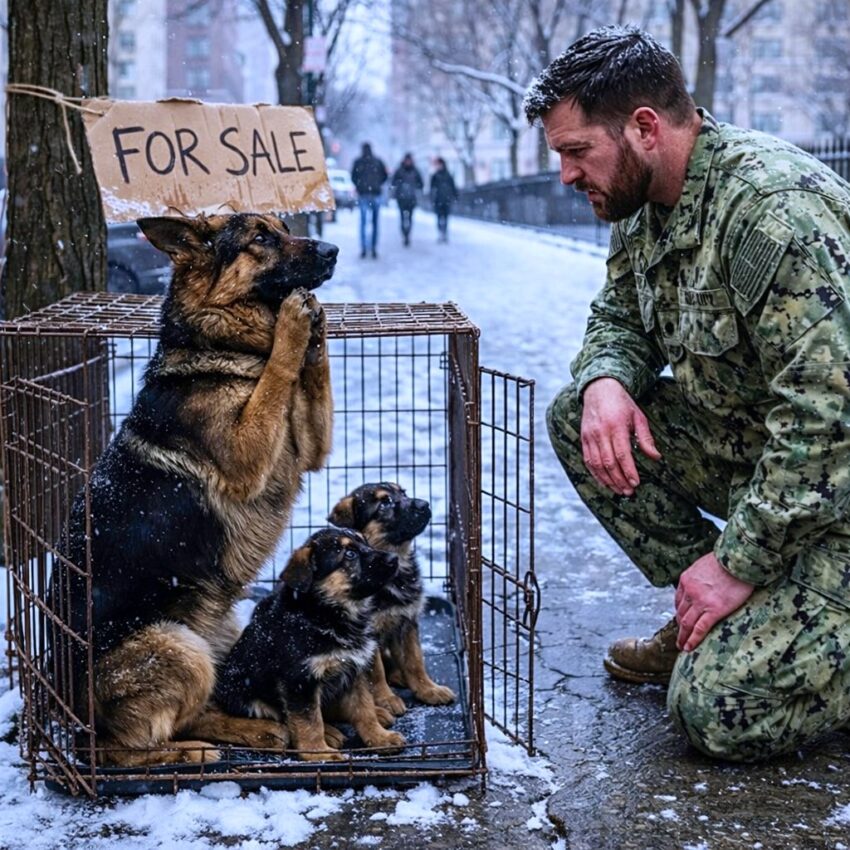
A rusty metal cage sat crooked on a snowy New York sidewalk, half-buried in slush as if the city itself was trying to forget it existed. A cardboard sign was taped across the top in thick black marker: FOR SALE. The letters were already bleeding from the wet cold.
Inside, a German Shepherd mother curled around two tiny puppies. Their fur was glazed with frost, their bodies pressed tight together, too tired to whimper. The mother’s ribs showed beneath a dulled coat, and she trembled from the effort of staying warm while keeping her pups alive.
Jaw‑Dropping Jumps That Broke The Internet

730
People moved past without stopping. Boots crunching. Phones buzzing. A city that didn’t slow down for anything, not even suffering.
Then one man stopped.
His name was Ethan Walker. Thirty-eight. Navy SEAL—recently home, technically safe, but not truly at peace. He wore a faded Navy working uniform under a heavy jacket, the kind of clothing that looked less like style and more like habit. His hair was cut short, his beard trimmed out of routine, and his posture still carried the controlled readiness of someone trained to scan a room before he breathed.
He’d been back for three months, but “home” felt like a word he couldn’t hold onto. Nights were filled with sand and static and alarms that weren’t there. Days were filled with noise that felt pointless. So he walked—through winter air sharp enough to sting, through streets that moved like rivers—just to feel grounded.
On East 72nd, he saw the cage.
At first, he thought it was abandoned junk. Then he noticed the sign. Then he noticed the dog.
He stopped so suddenly a couple behind him bumped shoulders and muttered. Ethan didn’t hear them. He stared at the mother dog’s eyes—dark brown, rimmed red from cold and exhaustion—and saw something painfully familiar. Not fear, exactly. More like resignation. The look of a living thing that had learned help was not guaranteed.
He crouched beside the cage, slow and careful, hands visible. The dog stiffened, muscles tightening around her pups, ears twitching. Ethan kept his voice low, steady.
“Hey,” he murmured. “Easy. I’m not here to hurt you.”
The mother’s gaze didn’t leave him. She didn’t growl. She didn’t bark. She just watched him like she was measuring whether he was danger or hope.
Ethan removed one glove and reached toward the bars, not forcing contact, only offering his hand. The metal was so cold it burned. For a long moment nothing happened. Then the dog leaned forward and sniffed his fingers.
That small gesture hit him hard. Trust shouldn’t come easily after betrayal, but she gave it anyway—fragile, tentative, and honest.
A bus roared past, rattling the pavement. Snow fell from an awning and melted into Ethan’s shoulders. He stayed kneeling as if moving would break the moment.
Above the street, in a small apartment looking down through a frost-lined window, an elderly woman watched. Eleanor Pierce, seventy, retired schoolteacher, widow of a Vietnam veteran. Her days were quieter than she ever expected, filled with books, tea, and the street below. She saw the man kneel beside the cage and recognized the posture immediately—the stillness of someone who had carried too much for too long.
Her late husband had stood like that when he came home from war.
Ethan glanced at the puppies. One was bolder, pressing its nose against its mother’s chest. The other was smaller, barely moving except for shallow breaths. The mother nudged them gently, protective and exhausted.
Ethan’s jaw tightened. He looked around for anyone who might claim the cage. No one did. The sign said FOR SALE, but there was no seller. Just abandonment dressed up as commerce.
Across the street, a chestnut vendor stood behind a cart, shoulders hunched against the cold. Ethan walked over.
“Do you know who left that cage?” he asked, nodding back toward the lamppost.
The vendor squinted. “That thing? Been there since early morning. Thought someone would come back.” He shrugged. “People dump animals all the time. City’s full of them.”
Ethan didn’t argue. He just reached into his wallet and pulled out cash—two twenties, money he’d planned to stretch until his next check.
“I’m buying it,” he said.
The vendor blinked. “Buying what?”
“The cage,” Ethan replied. “And everything inside it.”
“It’s not mine,” the man said, but he took the bills anyway, as if sensing Ethan didn’t need permission—just closure. “Alright, buddy. Take care.”
Inside, a German Shepherd mother curled around two tiny puppies. Their fur was glazed with frost, their bodies pressed tight together, too tired to whimper. The mother’s ribs showed beneath a dulled coat, and she trembled from the effort of staying warm while keeping her pups alive.
Jaw‑Dropping Jumps That Broke The Internet
730
People moved past without stopping. Boots crunching. Phones buzzing. A city that didn’t slow down for anything, not even suffering.
Then one man stopped.
His name was Ethan Walker. Thirty-eight. Navy SEAL—recently home, technically safe, but not truly at peace. He wore a faded Navy working uniform under a heavy jacket, the kind of clothing that looked less like style and more like habit. His hair was cut short, his beard trimmed out of routine, and his posture still carried the controlled readiness of someone trained to scan a room before he breathed.
He’d been back for three months, but “home” felt like a word he couldn’t hold onto. Nights were filled with sand and static and alarms that weren’t there. Days were filled with noise that felt pointless. So he walked—through winter air sharp enough to sting, through streets that moved like rivers—just to feel grounded.
On East 72nd, he saw the cage.
At first, he thought it was abandoned junk. Then he noticed the sign. Then he noticed the dog.
He stopped so suddenly a couple behind him bumped shoulders and muttered. Ethan didn’t hear them. He stared at the mother dog’s eyes—dark brown, rimmed red from cold and exhaustion—and saw something painfully familiar. Not fear, exactly. More like resignation. The look of a living thing that had learned help was not guaranteed.
He crouched beside the cage, slow and careful, hands visible. The dog stiffened, muscles tightening around her pups, ears twitching. Ethan kept his voice low, steady.
“Hey,” he murmured. “Easy. I’m not here to hurt you.”
The mother’s gaze didn’t leave him. She didn’t growl. She didn’t bark. She just watched him like she was measuring whether he was danger or hope.
Ethan removed one glove and reached toward the bars, not forcing contact, only offering his hand. The metal was so cold it burned. For a long moment nothing happened. Then the dog leaned forward and sniffed his fingers.
That small gesture hit him hard. Trust shouldn’t come easily after betrayal, but she gave it anyway—fragile, tentative, and honest.
A bus roared past, rattling the pavement. Snow fell from an awning and melted into Ethan’s shoulders. He stayed kneeling as if moving would break the moment.
Above the street, in a small apartment looking down through a frost-lined window, an elderly woman watched. Eleanor Pierce, seventy, retired schoolteacher, widow of a Vietnam veteran. Her days were quieter than she ever expected, filled with books, tea, and the street below. She saw the man kneel beside the cage and recognized the posture immediately—the stillness of someone who had carried too much for too long.
Her late husband had stood like that when he came home from war.
Ethan glanced at the puppies. One was bolder, pressing its nose against its mother’s chest. The other was smaller, barely moving except for shallow breaths. The mother nudged them gently, protective and exhausted.
Ethan’s jaw tightened. He looked around for anyone who might claim the cage. No one did. The sign said FOR SALE, but there was no seller. Just abandonment dressed up as commerce.
Across the street, a chestnut vendor stood behind a cart, shoulders hunched against the cold. Ethan walked over.
“Do you know who left that cage?” he asked, nodding back toward the lamppost.
The vendor squinted. “That thing? Been there since early morning. Thought someone would come back.” He shrugged. “People dump animals all the time. City’s full of them.”
Ethan didn’t argue. He just reached into his wallet and pulled out cash—two twenties, money he’d planned to stretch until his next check.
“I’m buying it,” he said.
The vendor blinked. “Buying what?”
“The cage,” Ethan replied. “And everything inside it.”
“It’s not mine,” the man said, but he took the bills anyway, as if sensing Ethan didn’t need permission—just closure. “Alright, buddy. Take care.”