I used to think that love changes with time: that it matures, deepens, and settles. But I never expected mine to grow quiet in a way that felt like drowning.
I thought I knew my husband, Nick, like the back of my hand. We met in college, two broke students sharing midnight fries and dreams of someday. He made me laugh until I cried, and when he proposed five years later under a canopy of fairy lights in his parents’ backyard, I said yes with a certainty I hadn’t felt about anything before.
But now?
Now, he showers the moment he walks through the door, every day without fail. He leaves his phone face down on the table, silent and blinking. And when I ask questions, gently at first, then with growing unease, he just laughs.
“You’re imagining things,” he said one night while rinsing his plate a little too quickly, a little too neatly. “Babe, don’t be silly.”
I wanted to believe him. God, I did.
But the pattern was too hard to ignore.
Random “late meetings” at work. Half-hearted kisses. That strange, too-steady voice he used when explaining where he’d been.
And I started noticing other things too.
He changed his cologne, something woodsy and expensive. His shirts suddenly fit better, pressed and tucked in with care. Once, I found a receipt for two lattes from a coffee shop near his office. When I teased him about sneaking in caffeine with someone, he froze.
Then he smiled.
Not the kind of smile that says, You got me, but the kind that carries a chill behind it.
“You’re being paranoid,” he said, still smiling. “Honestly, Ash, if you don’t stop making stuff up, I’m going to start worrying about your mental health.”
The way he said it — soft, like he cared — made my breath catch.
He weaponized concern.
I didn’t even respond.
I just nodded, retreating into myself.
And that’s when the doubts started.
Maybe I was imagining it. Maybe I was overthinking. I mean, he hadn’t done anything concrete. Just little things. But little things add up, don’t they?
By the time he mentioned the work trip, I had stopped bringing anything up.
“It’s mandatory,” he said one Thursday morning, breezing into the kitchen with his overnight bag half-zipped. “Seven days, Chicago office. I’ll call every night, promise.”
I sat at the counter, still in my robe, hands wrapped around a mug that had long gone cold.
“You didn’t mention it before,” I said slowly.
“It came up last minute,” he replied, not even looking at me as he zipped his bag. “You know how these things go. I’ll miss you.”
He kissed my forehead — not my lips — and walked out the door.
That evening, I stood in our bedroom, staring at his side of the closet, half-empty. I looked around like a ghost, touching the space where his cologne bottle used to be, where his watch box had sat. All gone, packed.
I told myself I needed air.
The next day, I called my friend Michelle.
“Come with me,” I blurted out. “Let’s go somewhere. Just… get out of town for a night or two.”
“Do you have anywhere in mind?”
“Not really. Just… away.”
Michelle had known me since I was 14. She didn’t ask too many questions. Just said, “Pick me up at 10.”
We drove to a small city about an hour and a half away. Booked a boutique hotel we found online and spent Saturday afternoon walking through craft markets, sipping hot cider, and pretending we were 25 again.
For a few fleeting hours, I felt like myself.
I laughed. I even danced in the street when a local band started playing outside a café. Michelle clapped and filmed me, yelling, “That’s the Ashley I remember!”
That night, we dressed up a little and found this cozy little Italian restaurant tucked into a brick alleyway. Dim lights, candles on every table, soft jazz playing overhead. I ordered a Negroni. She got a glass of Merlot. Our booth was next to a window, and for the first time in weeks, I felt my shoulders drop.
“I’m proud of you, you know,” Michelle said, reaching for her glass. “For not going crazy. For not letting this eat you alive.”
I smiled at her weakly.
“I’m trying. Really trying.”
She was in the middle of telling me about her new assistant at work when I glanced up toward the back of the restaurant.
And froze.
A booth in the far corner. Half-lit, but unmistakable.
Nick.
My Nick.
My husband.
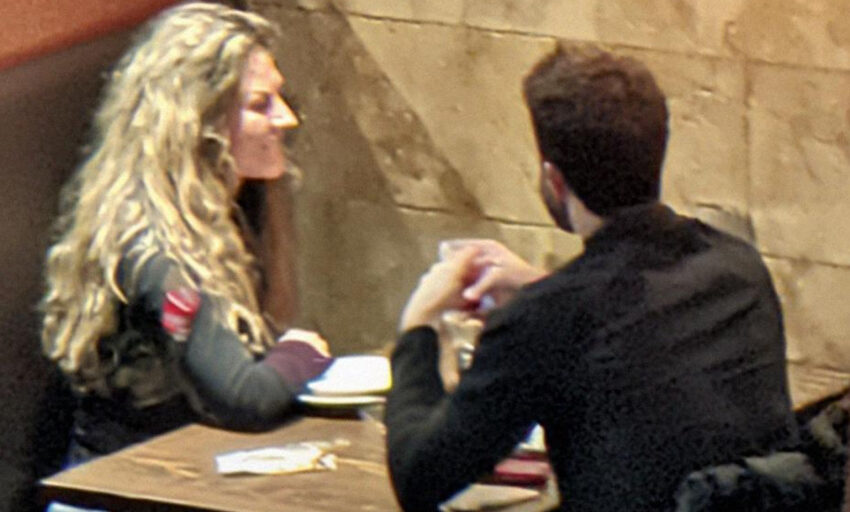
Leaning in, his head tilted toward a woman with shiny dark hair. Their fingers laced together across the table as if it were the most natural thing in the world. He was laughing, the deep, warm laugh he used to reserve for me.
Everything inside me turned to ice.
I couldn’t breathe. The world tilted sideways. For a moment, I thought I might faint, scream, or run.
Michelle saw the color drain from my face. “Ash? What is it?”
I couldn’t speak. I just pointed.
She turned slowly. Her eyes widened.
“Oh, my God.”
I swallowed hard. Rage replaced the nausea.
So this was his “mandatory work trip?” This was why he kissed my forehead goodbye?
And he had the nerve to question my mental health?
I felt something rise inside me, not a scream, not a sob, but something sharp and steel-edged.
“I’ll be right back,” I said, setting down my water.
Michelle reached for my arm. “Ashley, wait. What are you…”
But I was already standing.
Every step toward their table felt like a drumbeat in my chest. Nick still hadn’t seen me. He was too busy gazing into her eyes, thumbs brushing over her knuckles.
I stopped beside their table, casting a long shadow across the candlelight.
He looked up.
His face went pale in an instant.
“Hi, sweetheart,” I said, my voice calm. Too calm. “How’s Chicago?”
For half a second, Nick just stared at me like I was a mirage, something his guilt had conjured up to punish him.
His mouth opened, then closed.
The woman across from him followed his gaze and turned slowly, confusion flickering across her face.
“Ashley?” he finally said, his voice cracking on my name. “What are you doing here?”
I smiled. Not because anything was funny, but because my body didn’t know what else to do with the surge of adrenaline tearing through me.
“I could ask you the same thing,” I said evenly. “Last I checked, you were on a mandatory work trip. Seven days. Chicago, right?”
The woman stiffened.
Her hand was still in his, but her fingers loosened, slipping away like she’d just touched something hot.
Nick stood up so fast his chair scraped loudly against the floor. “Can we talk?” he hissed. “Not here.”
I glanced around. A few diners were pretending very hard not to watch, eyes darting back to their plates. The waiter had paused mid-step, uncertain.
“Oh, no,” I said, pulling out the chair across from the woman and sitting down. “We’re already talking. Sit.”
He didn’t. Instead, he ran a hand through his hair, a nervous habit I knew too well.
“This isn’t what it looks like,” he said.
The woman finally found her voice. “Nick, who is this?”
I turned to her before he could answer. “I’m his wife.”
Her face drained of color.
“You’re… married?” she whispered, looking between us.
Nick swallowed. “Ashley, please. You’re making a scene.”
That was it. Something in me snapped, not violently, but cleanly, like a rope being cut.
“A scene?” I repeated.
“You told me I was imagining things. You told me I should be worried about my mental health. And now I’m standing in front of my husband on his fake work trip while he’s holding another woman’s hand, and I’m the one making a scene?”
My voice shook despite my best efforts. I could feel my pulse in my ears.
The woman pushed her chair back and stood. “Nick,” she said quietly. “You told me you were separated.”
Separated.
The word landed between us like shattered glass.
He didn’t deny it.
I laughed then, a short, broken sound that didn’t feel like it came from me. “Separated,” I echoed. “Is that what we’re calling it now?”
“Ashley, please,” he said, lowering his voice again, like volume was the problem. “Let’s not do this here.”
“No,” the woman said sharply. She looked at him with something hard in her eyes. “Let’s do this now. Because you said your marriage was over. You said you were staying in a hotel because things were ‘complicated.’”
I watched his lies unravel in real time, thread by thread.
“How long?” I asked.
He hesitated.
“HOW LONG?”
He exhaled, defeated. “Six months.”
Six months.
The room tilted. I gripped the edge of the table to steady myself.
Six months of phone-down dinners.
Six months of late meetings. Six months of being told I was paranoid, unstable, and imagining things.
“I knew it,” I whispered. Not triumphantly. Just hollow.
The woman — her name, I would later learn, was Lauren — shook her head. “You told me you loved me.”
Nick reached for her arm, but she stepped back. “Don’t touch me.”
“I do,” he said desperately. “I just… things got complicated.”
I stood up slowly.
“You don’t get to say that like it’s a scheduling issue.”
He looked at me then, really looked at me, like he was finally seeing the damage he’d done. Or maybe he was just calculating.
“I was going to tell you,” he said.
“When?” I snapped. “After your next ‘work trip?’ Or after I’d doubted myself into oblivion?”
The waiter appeared at the table, eyes wide. “Is everything all right here?”
I smiled at him, even as my heart shattered.
“No. But it will be.”
Lauren grabbed her purse, hands shaking. “I’m leaving,” she said. “I won’t be part of this.”
She turned to me, eyes glossy. “I’m so sorry. I didn’t know.”
I believed her. Somehow, that made it worse.
She walked away without another word, leaving Nick and me standing across from each other, a small table between us, loaded with everything we hadn’t said.
“You humiliated me,” he said quietly.
I stared at him. “You destroyed me.”
He flinched.
“I loved you,” I went on. “I trusted you. And instead of telling me the truth, you made me question my sanity.”
“Don’t,” I cut in. “You meant exactly what you did.”
I turned and walked back toward my table, legs trembling. Michelle stood the moment she saw my face.
“We’re leaving,” she said, already grabbing her coat.
Nick followed us to the door. “Ashley, wait. Please. We need to talk about this.”
I stopped and turned to him one last time.
“We will,” I said. “Just not the way you want.”
Outside, the cold night air hit me like a slap. I gulped it in, my chest tight.
Michelle wrapped her arms around me. “I’m so sorry.”
“I’m not,” I said softly.
She pulled back. “You’re not?”
I shook my head. “I’m angry. I’m hurt. I’m devastated. But I’m not crazy. And tonight, I proved that to myself.”
Back at the hotel, I sat on the edge of the bed while Michelle paced.
“What are you going to do?” she asked.
I stared at my phone. Three missed calls from Nick. Two texts.
“Please call me.”
“We need to talk.”
I powered the phone off.
“I don’t know yet,” I said honestly. “But I know I’m done letting him tell my story.”
The next morning, I drove home alone. The house felt wrong without him, quieter but not peaceful. Like a stage after the actors have left.
His things were still everywhere. His shoes sat by the door, and his favorite mug was in the sink.
I sat at the kitchen table and waited.
When he came home that evening, his confidence was gone.
He looked smaller, uncertain.
“We should talk,” he said.
I nodded. “We should.”
He started with apologies, long and careful ones. He said he felt trapped, disconnected, and lonely. He said it “just happened.”
I let him talk.
When he finished, I said, “You don’t get to rewrite this. You cheated. You lied. And when I noticed, you tried to make me think I was unstable.”
His jaw tightened.
“I was scared.”
“That doesn’t excuse abuse,” I replied quietly.
He stared at me. “Abuse?”
“Yes,” I said. “Gaslighting is abuse.”
Silence stretched between us.
“I want a divorce,” I said.
The word felt heavy, but right.
He nodded slowly, as if he’d been expecting it.
“I’ll stay at a hotel,” he said.
“No,” I replied. “You’ll pack your things and go stay wherever you were planning to go next.”
He didn’t argue.
As he walked down the hallway, I finally let myself cry, not because I lost him, but because I found myself.
And that, I realized, was something he could never take from me.
After Nick left with a single suitcase and eyes that didn’t meet mine, the silence that followed wasn’t empty.
It was thick.
Heavy. Like the space in a room after a storm where everything’s still standing, but nothing feels quite the same.
I didn’t move right away. I just sat on the couch, legs tucked under me, fingers absently brushing the seams of a throw pillow while the front door clicked shut behind him. He didn’t slam it. He didn’t say goodbye.
Good. I didn’t want another performance.
That night, the house creaked in a way I hadn’t noticed before. The refrigerator’s hum sounded louder. The shadows stretched longer across the walls.
I thought I’d be afraid, being alone.
I wasn’t. I just felt hollow.
I didn’t call anyone. Posted nothing. I didn’t even cry.
I lit a candle and sat at the kitchen table, the same one where Nick once told me he wanted to start a family. Where we’d eaten takeout straight from the boxes and planned trips we never took. Where I had first noticed the phone turned face down, where I had smiled even while my gut whispered, something’s wrong.
I stared at the flame until it blurred.
The next morning, Michelle showed up with coffee, mascara smudged, her hair in a bun.
“You didn’t call,” she said, pushing her way in.
“I know,” I replied.
She placed the cups on the counter and turned to me. “How are you really?”
I opened my mouth to lie, but stopped. “Empty,” I said. “Like someone pulled the plug, and everything just drained out.”
Michelle nodded, lips pressed tight.
“That’s normal.”
She sat across from me and took my hand. I didn’t pull away.
“You were right,” I whispered. “All those months, I wasn’t losing my mind. I knew.”
“You always did,” she said. “You just loved him too much to see it clearly.”
That hurt, not because it was harsh, but because it was true.
Over the next few weeks, I learned how much of my life had been stitched around Nick. Small things unraveled first, like his cereal in the cabinet, his razor in the shower, and his side of the bed cold and untouched.
I boxed them up slowly, deliberately.
I didn’t burn anything. I wasn’t angry in that way. I didn’t want to erase the past. I just didn’t want to keep living in it.
When people found out — friends, family, coworkers — the responses came in waves.
Some were furious. “How dare he do this to you?”
Some were shocked. “You two always seemed so happy.”
A few had that pity-tinged kindness that made my skin crawl.
“If you ever want to talk, I’m here. Divorce is so hard.”
But the worst were the ones who said, “Maybe he just made a mistake.”
As if seven months of gaslighting and cheating were a momentary lapse in judgment.
I started therapy.
In the first session, I sat in the office, my gaze fixated on a box of tissues on the table.
“I don’t know where to start,” I said.
“Start with where you are now,” she replied.
So I did.
I talked about the night at the restaurant. The numbness. The anger. The grief.
I told her about the version of me I used to be, the one who trusted easily, who gave the benefit of the doubt, and who loved without keeping score.
And I admitted, with a shaking voice, that I missed that version of myself more than I missed my husband.
Healing, I learned, isn’t linear.
Some days I felt strong, even light. Other days, I sat on the kitchen floor crying over a song, or the way the light hit the window, just like it did on the morning Nick left.
But I never regretted walking up to that table.
I never regretted speaking the truth.
One day, about two months after he left, I got a letter.
Not a text. Not an email.
A letter — in his handwriting.
I held it for a long time before opening it. My hands trembled slightly as I unfolded the paper. It smelled faintly of his cologne, and for a second, I hated that I noticed.
It read:
Ashley,
I’ve thought about writing this a hundred times, but I never knew how to begin. I know I hurt you. I know I lied. I wish I could take it back, but I can’t.
I never stopped caring about you — in my own way. I think somewhere along the line we changed, and I didn’t know how to talk about it. Maybe I was scared. Maybe I was selfish. Probably both.
You didn’t deserve how I handled things. You didn’t deserve any of it.
I hope you can forgive me someday. I don’t expect anything from you. I just needed you to know.
— Nick
I stared at the words for a long time, waiting to feel something more than the dull ache that had been living in my chest since the night in the restaurant. But there was no anger, no tears.
Just a deep, weary silence.
I folded the letter, placed it in a drawer, and never wrote back.
Forgiveness, I realized, doesn’t always need to be spoken. Sometimes, it’s choosing not to carry someone else’s weight anymore.
In the spring, I repainted the bedroom. Soft blue, like the ocean before sunset. I changed the sheets, bought new pillows, and replaced the framed photo of our wedding with a print of a wildflower field.
I didn’t do it out of spite.
I did it because I needed a space that felt like mine again.
Michelle and I started having weekly movie nights. She brought wine. I made popcorn. We laughed, cried, and talked about work and crushes, and memories from college that still made us blush.
I started running again, something I hadn’t done in years. Just a mile or two in the mornings, enough to feel my body moving, my lungs working, my feet hitting the pavement like a metronome.
It reminded me I was alive.
Whole. Capable.
One morning, I passed a couple on the trail, holding hands, laughing.
I didn’t flinch.
Another small victory.
By summer, I felt something shift. Not closure, not entirely. But peace.
A soft, quiet peace.
I stood in my backyard barefoot, a cup of tea in hand, watching the wind move through the trees.
The sun warmed my face.
And I thought: I’m okay.
Not fixed. Not perfect. But okay.
Nick had once told me I was imagining things.
But the only thing I imagined — the only thing — was that he was the man he claimed to be.
Now I know better.
I know myself.
And that’s worth more than any illusion of love.