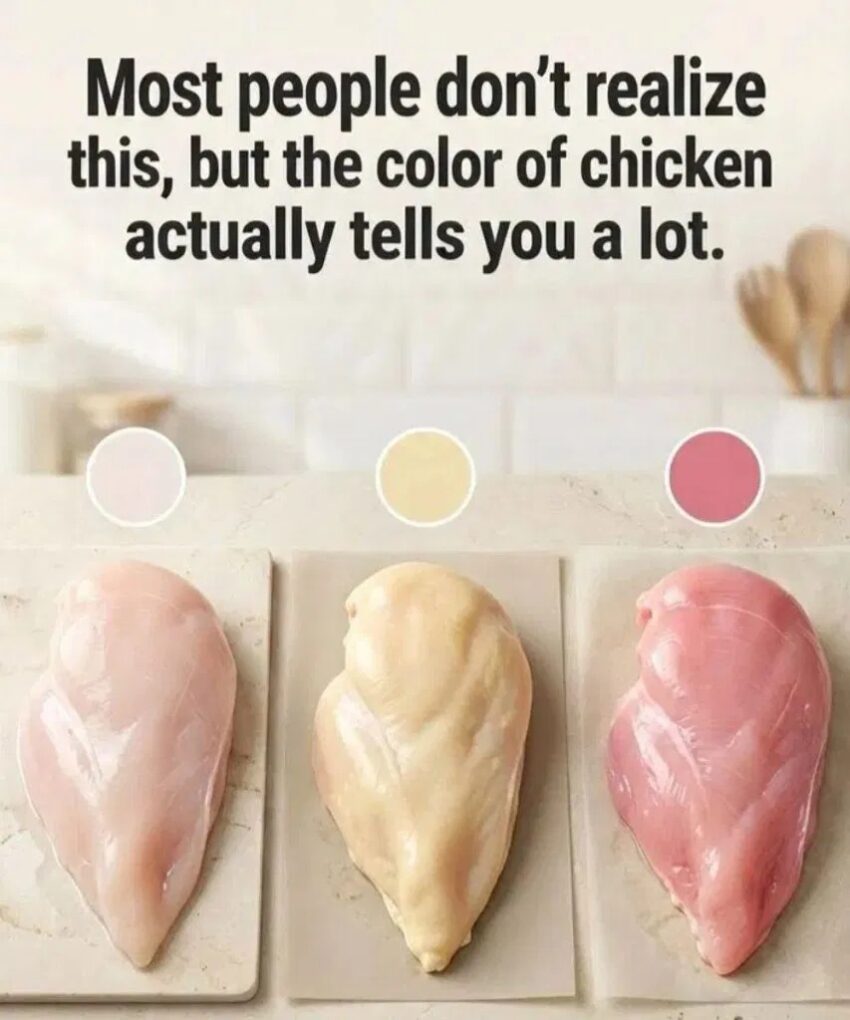
That tray of chicken in your cart might be telling a story you didn’t notice. One package looks pale, almost pink. Another has a deep yellow tone. Same cut. Similar price. Yet they look completely different. It’s easy to wonder whether one is healthier, more natural, or somehow better. Before even reading the label, your eyes are already forming a judgment.
We instinctively trust appearance when buying food. Freshness, quality, even taste seem connected to color. But with chicken, looks can be misleading. The shade of the meat is less about safety and more about how the bird lived and what it was fed before reaching the store.
Why some chicken is pale
Light colored chicken usually comes from large scale commercial farming. These birds are bred to grow quickly and efficiently. They spend most of their lives indoors, with controlled feed designed to produce rapid weight gain. The result is affordable meat that fills most supermarket shelves.
A pale color does not automatically mean the chicken is unsafe or unhealthy. It simply reflects an industrial production system built for volume and speed rather than natural movement or varied diet. That farming model shapes both the texture and appearance of the meat.
Why other chicken turns yellow

Golden or yellow toned chicken often comes from a different feeding pattern. Diets that include corn, marigold, or plants rich in natural pigments give the meat a warmer color. Birds that spend time outdoors, pecking grass and insects, also tend to develop firmer flesh and deeper flavor.
However, color can be engineered. Some producers adjust feed specifically to create that yellow hue because shoppers associate it with better quality. In those cases, the chicken may still come from intensive farming despite the traditional looking color. This is why relying only on appearance can be misleading.
What actually matters when choosing
Real clues come from labels, not shades. Words like free range, pasture raised, organic, or certified humane tell you far more about how the animal lived, what it ate, and whether antibiotics were used. These factors influence flavor, nutrition, and ethics more than color ever will.
Your senses also help. Fresh chicken should feel firm and smell clean. Any unpleasant odor is a warning sign regardless of whether the meat is pale or yellow. Once cooked, juiciness and taste will reflect the bird’s lifestyle far more than its appearance in plastic wrap.
In the end, there is no perfect color of chicken. The best choice depends on your budget, your priorities, and the kind of meal you want to prepare. Color is only the first hint. The real story lies behind the label.